
All the Essential Information Regarding Sleep Stages
Sleep holds immense importance for maintaining good health. It is a vital activity that impacts various aspects of our well-being. When we sleep, our bodies engage in essential processes such as muscle repair, bone growth, hormone regulation, and memory consolidation.
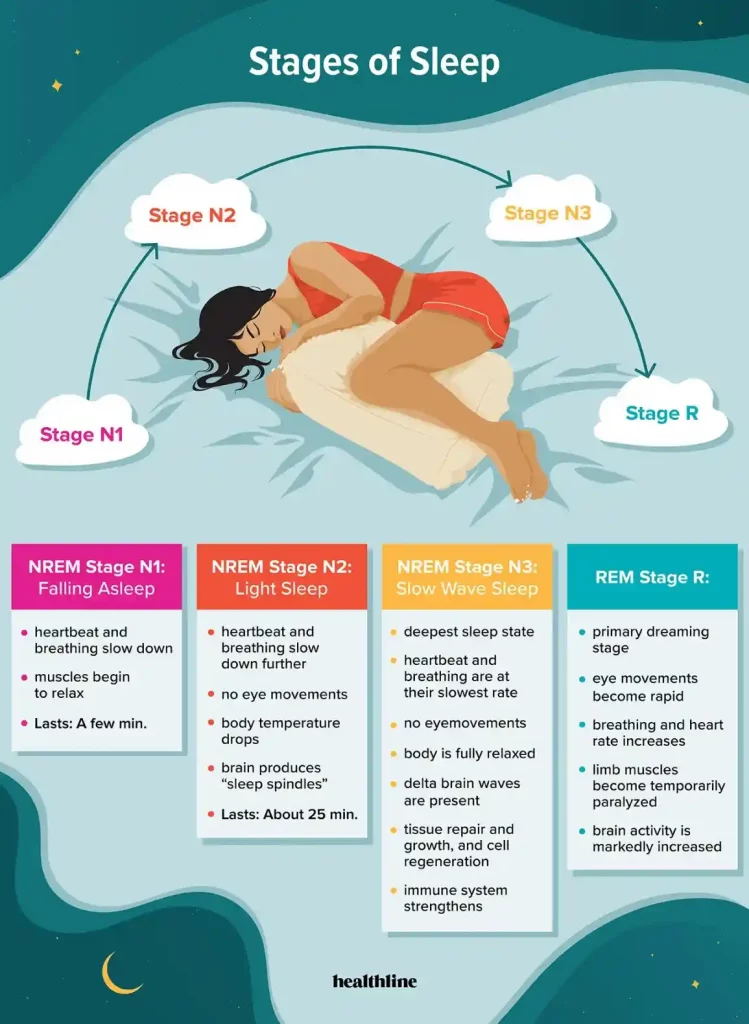
can be categorized into two main types: rapid eye movement (REM) sleep and non-REM (NREM) sleep. NREM sleep, which is the initial state of sleep for most adults, consists of three sub-stages known as stage N1, Sleep stage N2, and stage N3. Previously, there were four stages of NREM sleep, but the current classification combines NREM stage 3 and NREM stage 4 into stage N3.
These sleep stages occur in cycles lasting approximately 90 to 120 minutes each, with a typical night of sleep consisting of four to five cycles. Throughout the night, there is a shift in the distribution of these stages, with a higher percentage of NREM sleep in the first half and a higher percentage of REM sleep in the second half.
In this article, we will delve into these sleep stages, explore sleep disorders, and provide tips to enhance the quality of your sleep.
Understanding the Different Phases of Sleep
The sleep cycle consists of non-REM (NREM) sleep and REM sleep. NREM sleep encompasses three stages, with the final stage being a deep sleep that is difficult to awaken from. REM sleep, which occurs about an hour to an hour and a half after falling asleep, is associated with vivid dreams.
NREM Stage N1:
This initial stage of NREM sleep marks the transition from wakefulness to sleep and lasts only a few minutes. It is a light stage of sleep, and individuals awakened from this stage may not realize they were asleep. During this stage, eye movements are slow, heartbeat and breathing slow down, muscles begin to relax, and low amplitude mixed frequencies waves in the theta range (4 to 7 Hz) are produced.
NREM Stage N2:
The second stage of NREM sleep constitutes the majority of total sleep time and is relatively lighter. It is the stage before entering deep sleep. During N2, heartbeat and breathing further slow down, there are no eye movements, body temperature drops, and distinct brain wave features called sleep spindles and K-complexes appear.
NREM Stage N3:
The final stage of NREM sleep is the deepest sleep stage, also known as slow-wave or delta sleep. It involves various essential health-promoting processes, such as tissue repair, growth, cell regeneration, and immune system strengthening. Stage N3 is characterized by difficulty in arousal from sleep, slowest heartbeat and breathing rate, no eye movements, complete body relaxation, and presence of delta brain waves.
REM Stage R:
REM sleep is divided into two phases: phasic and tonic. Phasic REM sleep includes rapid eye movements, while tonic REM sleep does not. Stage R typically occurs approximately 90 minutes after falling asleep and is considered the primary “dreaming” stage of sleep. It lasts around 10 minutes in the first cycle and increases in duration with each subsequent REM cycle. Eye movements become rapid during phasic REM, breathing and heart rate increase and become more variable, muscles become paralyzed but may experience twitches, and brain activity significantly increases.
Throughout the night, these sleep stages are cyclically repeated approximately every 90 minutes.
Interesting Sleep Facts:
- – Humans spend about one-third of their lives sleeping, while cats devote around two-thirds of their time to sleep. Koalas and bats can sleep up to 22 hours a day.
- – Newborn babies need 14 to 17 hours of sleep daily, while teenagers require 8 to 10 hours. Most adults need 7 to 9 hours of sleep.
- – Sleep deprivation, even as little as 24 hours without sleep, can lead to significant mood swings, impaired functioning, and altered perception.
- – Energy levels naturally dip during two specific periods of the day: 12-2 p.m. and 8-9 p.m., which explains midday fatigue after lunch.
- – Sleep quality can be negatively affected at higher altitudes due to a reduction in deep sleep.
- – While much remains to be discovered about sleep, it is clear that sleep is as crucial to good health as nutrition and exercise.
Understanding Sleep Disorders and Their Treatment
According to the American Academy of Sleep Medicine, approximately 70 million people experience sleep disorders each year. These disorders can have a detrimental impact on sleep quality, leading to other health issues. Below, you will find information on some common sleep disorders and their treatments.
Insomnia:
Insomnia is a chronic sleep condition characterized by difficulty falling asleep, staying asleep, or both. It often results in excessive daytime sleepiness and fatigue. Cognitive behavioral therapy (CBT) is the primary treatment for insomnia. It may be combined with sleep medications to aid in falling and staying asleep. Improving sleep hygiene can also be beneficial for some individuals.
Sleep Apnea:
Obstructive sleep apnea (OSA) occurs when breathing stops during sleep due to narrow airways in the throat. This condition can significantly impact sleep quality. The first-line treatment for OSA is a continuous positive airway pressure (CPAP) machine, which ensures proper airflow during sleep. If CPAP is ineffective, bilevel positive airway pressure (BiPAP or BPAP), oral appliances, or surgery may be considered.
Restless Leg Syndrome (RLS):
RLS is a neurological disorder causing uncomfortable sensations in the legs, especially when at rest or trying to sleep. It often leads to sleep deprivation. Certain medications are FDA-approved for managing RLS symptoms, and practicing good sleep hygiene can help relax the body before bedtime.
Shift Work Disorder:
Shift work disorder affects individuals who work non-traditional schedules, disrupting their natural sleep-wake cycle. This condition increases the risk of daytime sleepiness and health problems. Treatment includes strategic napping, avoiding stimulants, and reducing working hours whenever possible. Light-blocking tools, like eye shades or curtains, can be helpful for daytime sleepers.
Narcolepsy:
Narcolepsy is a chronic central nervous system disorder characterized by extreme daytime sleepiness, sleep attacks, and disrupted nighttime sleep. Medications such as stimulants and SSRIs are used to manage symptoms. Adopting good sleep hygiene, maintaining a healthy diet, and regular exercise can promote better sleep. Adjustments in daily schedules and support groups or counseling can also aid in coping with narcolepsy.
Tips for Quality Sleep:
Practicing good sleep hygiene is crucial for obtaining quality sleep. Here are some tips to improve sleep hygiene:
- – Spend time outdoors in natural light during the day to maintain a healthy circadian rhythm.
- – Engage in regular exercise or physical activity.
- – Limit naps to 20-30 minutes to avoid interfering with nighttime sleep.
- – Avoid stimulants, nicotine, alcohol, and foods that can disrupt sleep.
- – Limit screen time before bed, as electronic devices emit blue light that can affect sleep hormones.
- – Create a comfortable sleep environment with high-quality bedding and accessories.
Incorporating these tips gradually can significantly enhance sleep quality. If sleep difficulties persist, it is advisable to consult a doctor for further evaluation and additional treatment options.
The bottom line
In summary, every night your body goes through different stages of sleep, including non-REM and REM sleep, which affect various aspects of your body. Adequate sleep is essential for important bodily functions such as digestion, growth, and memory. Sleep disorders like insomnia can negatively impact sleep quality and daily functioning. To improve sleep quality, it is crucial to address any underlying issues and practice good sleep hygiene.
similar articles

Is it possible to compensate for a lack of sleep? The straightforward answer is yes. If you find yourse…

Experiencing difficulty in falling asleep? It might be because it’s too quiet for you. Surprisi…